Why Cat Nail Trims Matter
We get it — trimming your cat’s nails isn’t exactly a bonding moment. Most cats would rather nap in a sunbeam or on your keyboard than sit still for a nail trim. But regular cat nail trims are essential for their health, comfort, family members, and even your home’s well-being.
Cats’ nails grow continuously, just like ours. In the wild, cats naturally scratch on trees and rough surfaces that helps them wear down their nails. Indoor cats don’t always get enough that natural wear and tear. Even scratching posts don’t always wear them down enough. Without regular trimming, this can become a real problem.
Overgrown nails can cause pain or injury. When a cat’s nail gets too long it can start to curve inward. If left without nail trims for too long, they can grow long enough to curve inward and press into – or even puncture – their paw pad leading to pain, limping, and possibly even infections that require veterinary care. What begins as an ‘it can wait’ can quickly turn into a serious (and expensive) issue.
Cats’ nails can also easily get caught in fabrics: Blankets, carpets, rugs, clothing, and upholstery become claw traps, which can startle your cat and cause broken nails that can become painful. Cats have the natural instinct to ‘make biscuits’ and knead for comfort. When their nails get caught, it suppresses this natural instinct and can cause behavior issues. Never mind cause damage to the fabric surfaces in your home.
And then there’s damage to your floors. That “click-click” sound on your hardwood and tile floors isn’t just annoying, it’s a sure sign those nails are too long.
3 Signs It’s Time for Your Cat’s Nail Trim
As soon as you notice any of these signs, it’s time to trim your cat’s nails:
- Snagging: Nails getting stuck in soft surfaces like blankets and rugs, your (or a family member’s) clothes and other soft surfaces in your home
- Clicking: Audible tapping when your cat walks on hardwood or tile floors means your cat’s nails have grown past their paw pads
- Curling: Nails visibly curving toward the paw pad are a red flag for discomfort and/or injury and even though you may not see it, you may notice they are limping or their gait changes
How to Trim Without the Drama
Trimming doesn’t have to be a wrestling match. With a little patience and the right approach, you can make nail trimming time smoother:
Try the “purrito” method. Wrap/swaddle your cat in a towel not only to keep them calm and secure, but also to keep you safe from getting scratched.
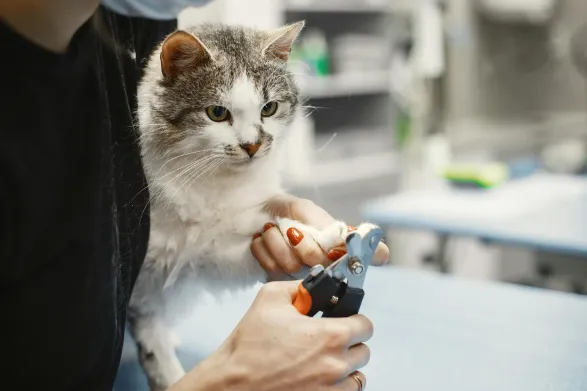
Use the proper tools. Cat-specific nail clippers are safer and more precise because they are designed especially for use on their small, curved nails and give you better control. Avoid using human nail trimming tools because these can crush or split their nails.
Stay chill and go slow. Cats are highly intuitive and your energy affects theirs. Speak softly, move slowly, handle their paws gently and offer treats and/or take breaks if needed.
Don’t forget to reward them generously with treats, praise, and playtime afterward help build positive associations. Over time, your cat will likely get used to having their nails trimmed.
Or Skip the Stress Entirely…
If the idea of giving your cat a nail trim makes you sweat, you’re not alone. That’s why Caticures To Go offers professional, stress-free nail trims right in the comfort of your home. No carriers, no car rides, no drama — just a happier cat and peace of mind for you.
Our Purrfect Start package might be the perfect answer for your cat’s nail trim needs. Still have questions? If mobile, in-home cat nail trims are new to your, our FAQ page is a helpful resource.
Contact us today to set up your house-call cat nail trim appointment.